Oral Update on the human rights situation in Sri Lanka

48th session of the Human Rights Council
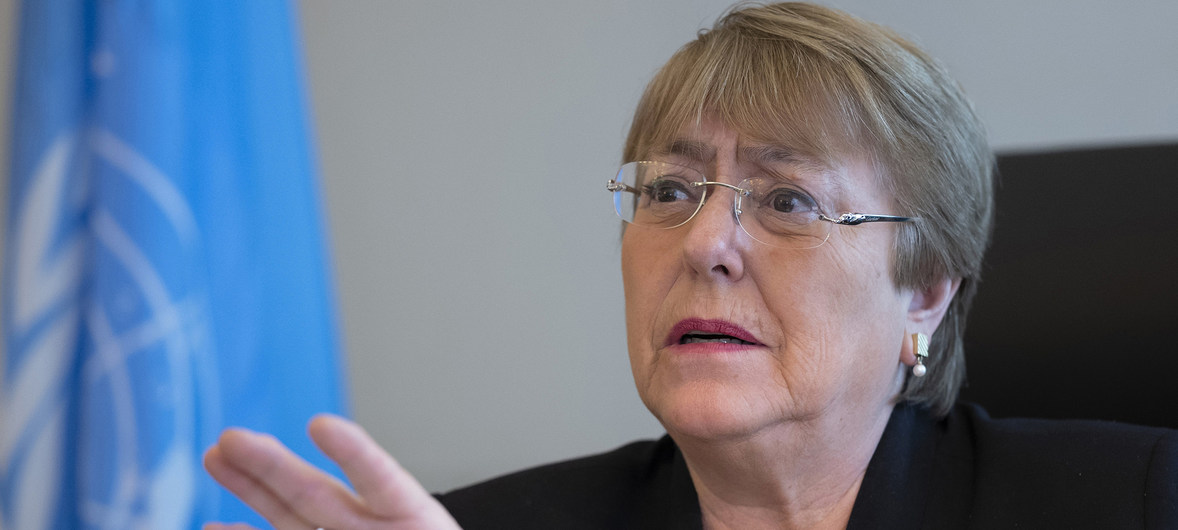
Statement by Michelle Bachelet, UN High Commissioner for Human Rights

Geneva, 13 September 2021

Distinguished President,
Excellencies,

I am pleased to update the Human Rights Council on Sri Lanka and the trends and issues identified in my last report.  I acknowledge the inputs sent by the Government in preparation for this update, and I note the President’s statement in June that the Government is “committed to work with the UN to ensure accountability” and will implement “necessary institutional reforms.” I look forward to seeing concrete actions to this effect – in line with the recommendations that have been made in our reports and by various human rights mechanisms – and my Office stands ready to engage.

I also encourage the swift and public release of the reports of the national Commission of Inquiry that was appointed in January 2021, which I understand will complete its mandate by the end of this year, so that its work and recommendations can be assessed.

The current social, economic and governance challenges faced by Sri Lanka indicate the corrosive impact that militarisation and the lack of accountability continue to have on fundamental rights, civic space, democratic institutions, social cohesion and sustainable development.

A new state of emergency was declared in Sri Lanka on 30 August, with the stated aim of ensuring food security and price controls, amid deepening recession. The emergency regulations are very broad and may further expand the role of the military in civilian functions. The Office will be closely monitoring their application.

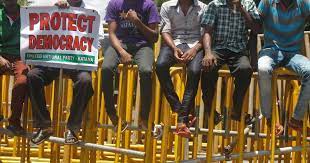
I note with interest the President’s recent meeting with some civil society leaders, and I encourage broader dialogue and steps to open Sri Lanka’s civic space.  Regrettably, surveillance, intimidation and judicial harassment of human rights defenders, journalists and families of the disappeared has not only continued, but has broadened to a wider spectrum of students, academics, medical professionals and religious leaders critical of government policies. Several peaceful protests and commemorations have been met with excessive use of force and the arrest or detention of demonstrators in quarantine centres.

New regulations on civil society groups are being drafted, and it is widely feared that they will further tighten restrictions on fundamental freedoms. I urge that the draft be made public to allow the broadest possible discussion.

I am concerned by developments in judicial proceedings in a number of emblematic human rights cases.  They include the Attorney General’s decision not to proceed with charges against former Navy commander Wasantha Karannagoda in the case of the enforced disappearances of 11 men in 2008 and 2009.

Despite various inquiries, the victims of the Easter Sunday bombings in 2019 and religious leaders continue to call urgently for truth and justice, and a full account of the circumstances that permitted those attacks.

The President’s recent pardon of a former member of parliament, Duminda Silva, who was convicted for killing a politician in 2011, also risks eroding confidence in the rule of law and judicial process.

I am deeply concerned about further deaths in police custody, and in the context of police encounters with alleged drug criminal gangs, as well as continuing reports of torture and ill-treatment by law enforcement officials.

In March, new “de-radicalization” regulations were issued that permit arbitrary administrative detention of individuals for up to two years without trial.  I note that the Supreme Court has issued an interim stay order on their enforcement while it considers fundamental rights petitions to challenge the decree. The Government has also prescribed or listed over 300 Tamil and Muslim groups and individuals for alleged links to terrorist groups.

In June, 16 prisoners who had been convicted under the problematic Prevention of Terrorism Act, and who were nearing the end of their sentences, were pardoned. An Advisory Board has been established to which detainees under the Act can apply for their cases to be reviewed, and I urge a speedy resolution to these long-standing cases.

The Government has reaffirmed its intention to revisit the Act and established a Cabinet sub-committee for this purpose. However, I am deeply concerned about the continued use of the Act to arrest and detain people.  Lawyer Hejaaz Hizbullah has now been detained for 16 months under the Act without credible evidence presented before a court. Likewise, Ahnaf Jazeem, a teacher and poet, has been detained without charge since May 2020.  I urge an immediate moratorium on the use of the Act, and that a clear timeline be set for its comprehensive review or repeal.

A National Policy for Reparations was approved in August, and reparation payments and reconciliation programs have continued. The Office of Missing Persons has also continued to operate – with a sixth regional office opened in Kilinochchi – but it needs to inspire confidence among victims.  I stress again the importance of transparent, victim-centred and gender sensitive approaches, and that reparations programs must be accompanied by broader truth and justice measures.

I note also that last month, the Global Alliance of National Human Rights Institutions decided to initiate a special review of the national Human Rights Commission to determine its compliance with the Paris Principles, indicating its concerns about the appointment process of the Commission and its effectiveness in discharging its human rights mandate.

Against this backdrop, my Office’s work to implement the accountability-related aspects of Resolution 46/1 has begun, pending recruitment of a start-up team.  We have developed an information and evidence repository with nearly 120,000 individual items already held by the UN, and we will initiate as much information-gathering as possible this year. I urge Member States to ensure the budget process provides the necessary support so that my Office can fully implement this work.

I encourage Council members to continue paying close attention to developments in Sri Lanka, and to seek credible progress in advancing reconciliation, accountability and human rights.

Thank you
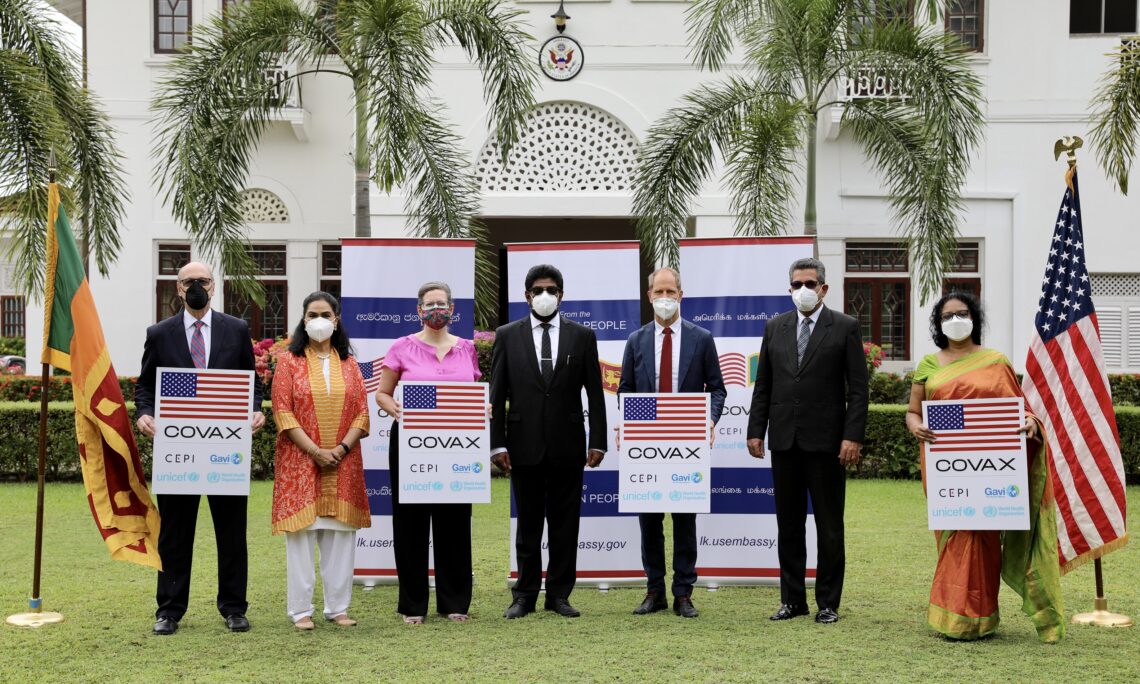
100,000 doses of the Pfizer vaccine: From USA to Sri Lanka

Colombo, Sri Lanka — The United States donated over 100,000 doses of the Pfizer-BioNTech COVID-19 vaccine to Sri Lanka today. These vaccines, delivered through COVAX, will help save lives and increase the COVID-19 vaccination coverage in Sri Lanka so essential to ending the pandemic.

“As the pandemic continues and new variants emerge, it is critical we work together to vaccinate as many people as possible, as quickly as possible,” said Alaina Teplitz, the U.S. Ambassador to Sri Lanka and Maldives. “This donation of FDA-approved Pfizer-BioNTech vaccines comes at no cost and represents the United States’ continuing commitment to the health and prosperity of the Sri Lankan people.”

This vaccine delivery is in addition to over 1.5 million Moderna doses donated by the U.S. to Sri Lanka on July 16.  As the global leader in public health assistance, the United States has donated $2 billion to the COVAX facility, an international initiative accelerating the research, development, and distribution of safe, effective, and high-quality vaccines to countries around the world.  COVAX has already delivered 209 million vaccines to 138 countries.  The U.S. is its largest single contributor

විමුක්ති කුමාරතුංග ක්‍රියාකාරී දේශපාලනයට?

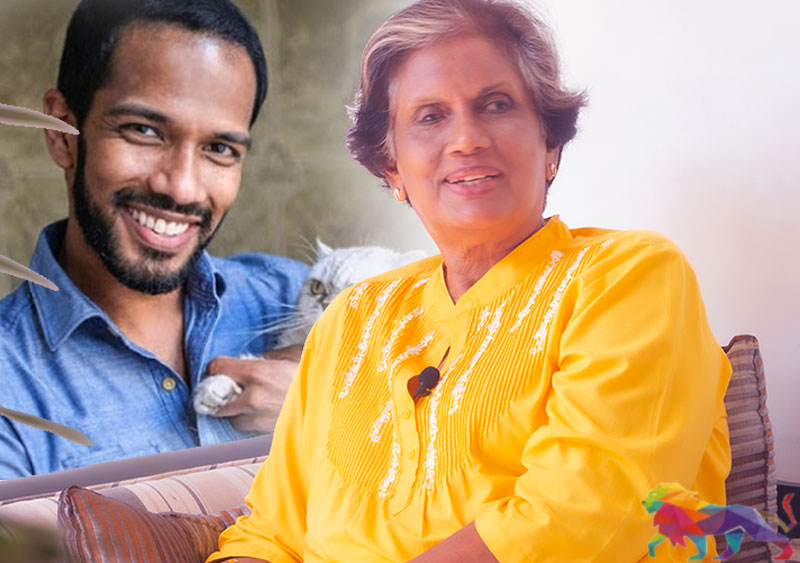
තම පුත් විමුක්ති කුමාරතුංග ක්‍රියාකාරී දේශපාලනයට පිවිසෙන බවට මේ දිනවල ජනමාධ්‍ය සහ සමාජ මාධ්‍ය හරහා පැතිරෙන පුවත් මුළුමනින් ම අසත්‍ය හා පදනම් විරහිත බව හිටපු ජනාධිපති චන්ද්‍රිකා බණ්ඩාරනායක කුමාරණතුංග අවදාරණය කර සිටියි.
එවැනි ප්‍රචාරයන් සම්පූර්ණයෙන් ම ප්‍රතික්ශේප කරන බවද ඇය කියා සිටියි.
හිටපු ජනාධිපතිනිය එබව සඳහන් කර ඇත්තේ, ඇයගේ ෆේස්බුක් පිටුවේ සටහනක් තබමිනි.
එම සටහනේ මෙසේද සඳහන් වේ.
”ඔහුට දේශපාලනයට පැමිණීමේ කිසිදු අවශ්‍යතාවක් හෝ ආසාවක් නොමැති අතර දේශපාලනය වෙනුවෙන් බණ්ඩාරනායකවරුන් සිදු කළ කැපකිරීම් සහ ලද පීඩාවන් ඔහුට ද උරුම කරවීමේ කිසිදු අදහසක් මට ද නොමැත.
ඔහු අප රටට බෙහෙවින් ආදරය කළද, රට වෙනුවෙන් සේවය කළහැකි එකම ක්‍රමය දේශපාලනය නොවන බව ද පවසනු කැමැත්තෙමි.
එබැවින් මෙවැනි අසත්‍ය ප්‍රචාරවලට නොරැවටෙන මෙන් සියලු ජනතාවගෙන් ඉතා ඕනෑකමින් ඉල්ලා සිටිමි. ”

ශ්‍රේෂ්ඨාධිකරණය ජනපති නියෝගයක් අත්හිටුවයි

ත්‍රස්තවාදය වැළැක්වීමේ පනතේ විධිවිධාන යටතේ ජනාධිපති ගෝඨාභය රාජපක්ෂ මහතා විසින් නිකුත් කරන ලද දැඩි අන්තවාදි මතවාදවලින් මුදා ගැනීමේ රෙගුලාසි ක්‍රියාත්මක කිරීම වළක්වාලමින් ශේෂ්ඨාධිකරණය ඊයේ (05) අතුරු නියෝගයක් නිකුත් කළේය.

මෙම අතුරු නියෝගය ලබන 24 වැනිදා තෙක් බලපැවැත්වෙන පරිදි නිකුත් කරනු කර ඇත.

මෙම රෙගුලාසි ක්‍රියාත්මක වීම වළක්වා ලන අතුරු නියෝගය නිකුත් කරන්නැයි ඉල්ලා මාධ්‍යවේදීන් හා මානව හිමිකම් ක්‍රියාකාරීන් පිරිසක් විසින් ගොනු කරන ලද මූලික අයිතිවාසිකම් පෙත්සම් 3ක් සලකා බලමින් ශේෂ්ඨාධිකරණය මෙම අතුරු නියෝග නිකුත් කළේය.

මුර්දු ප්‍රනාන්දු , යසන්ත කෝදාගොඩ සහ අචල වෙංගප්පුලි යන මහත්ම මහත්මීන්ගෙන් සමන්විත ත්‍රිපුද්ගල ශ්‍රේෂ්ඨාධිකරණ විනිසුරු මඩුල්ලක් හමුවේ මෙම පෙත්සම් සලකා බැලිණි.

මාධ්‍යවේදීන් හා මානව හිමිකම් ක්‍රියාකාරිකයන් වන රුවන් ලක්නාත් ජයකොඩි , කවින්ද්‍යා ක්‍රිස්ටෝපර් තෝමස්, විකල්ප ප්‍රතිපත්ති කේන්ද්‍රයේ විධායක අධ්‍යක්ෂ ආචාර්ය පාක්‍යසෝති සරවනමුත්තු හා ශිරාන් සනුර නමැත්තන් ගොනු කොට ඇති මෙම පෙත්සම්වල වගඋත්තරකරු ලෙස නීතිපතිවරයා නම් කරනු ලැබ සිටී.

පෙත්සම්කරුවන් සිය පෙත්සම් වලින් කියා සිටින්නේ 1979 අංක 48 දරණ ත්‍රස්තවාදය වැළැක්වීමේ තාවකාලික විධිවිධාන පනත යටතේ ජනාධිපති ගෝඨාභය රාජපක්ෂ මහතා විසින් පසුගිය මාර්තු 12 වැනි දින නිකුත් කරන ලද අංක 2218/68 /2021 දරණ අතිවිශේෂ ගැසට් නිවේදනය මගින් එම පනතේ 27 වැනි ඡේදය යටතේ අංක 01 නමින් “ දැඩි අන්තවාදි මතවාදයන්ගෙන් මුදාගැනීම් නමින් රෙගුලාසියක් ප්‍රකාශයට පත් කර ඇති බවය.

මෙම රෙගුලාසි යටතේ ඔනෑම පුද්ගලයකු අධිකරණ ක්‍රියාවලියකින් තොරව අත්අඩංගුවට ගෙන, පුනරුත්ථාපනයට යොමු කළ හැකි බවද පෙත්සම්කරුවෝ පෙන්වා දෙති.

මේ හේතුවෙන් පුද්ගලික නිදහසට දැඩි ලෙස තර්ජන එල්ල වන බවද පෙත්සම්කරුවෝ සිය පෙත්සම් වලින් කියා සිටිති.

මෙම රෙගුලාසි හේතුවෙන් ආණ්ඩුක්‍රම ව්‍යවස්ථාවේ 10 ,11 , 12.1 ,12.2 , 13.1 ,13.2 , 13.4 , 13 .5 ,13.6 ,13.1 (ආ) , 14.1 (ඈ) සහ 17 යන වගන්තී සෘජුවම උල්ලංඝනය වන බැවින් , මෙම පෙත්සම් විභාගයට ගැනීමට අවසර ලබා දෙන ලෙසත් , තමන්ගේත් රටේ ජනතාවගේත් මූලික අයිතිවාසිකම් කඩ වන බවට ප්‍රකාශ කරන ලෙසත් , මෙම රෙගුලාසිය ක්‍රියාත්මක කිරීම වළකාලන අතුරු නියෝගයක් නිකුත් ලෙසත් පෙත්සම්කරුවෝ සිය පෙත්සමින් ඉල්ලා සිටිති.


තත්ත්වය භයානකයි: කොවිඩ් වයිරසය වේගයෙන් පැතිර යනවා

කොවිඩ් වයිරසය වේගයෙන් පැතිර යන හෙයින් අත්‍යවශ්‍යම කරුණකට හැරෙන්නට වෙනත් කිසිදු කටයුත්තකට නිවෙස්වලින් බැහැර නොයන්නැයි රජයේ ප්‍රවෘත්ති දෙපාර්තමේන්තුව සියලු මහජනතාවගෙන් ඉල්ලීමක් කරයි.

එසේම කොවිඩ් මර්දන එන්නත නොගත් එය ලබාගත යුතු වයස් සීමාවේ පසුවන සියලු දෙනා එන්නත වහාම ලබාගන්නැයිද එම දෙපාර්තමේන්තුව ජනතාවගෙන් ඉල්ලා සිටී.

තවද සෙනඟ ගැවසෙන මංගල අවමංගල්‍ය හා වෙනත් උත්සව සඳහා සහභාගි වීම සම්පූර්ණයෙන්ම නතර කරන්නැයි ඉල්ලා සිටින රජයේ ප්‍රවෘත්ති දෙපාර්තමේන්තුව කාමර, ශාලා ,විදුලි සෝපාන ක්‍රියාත්මකවන ආවරණ සහිත ස්ථානවල දිගු වේලාවක් රැඳී සිටීමෙන් වළකින්නැයිද දැනුම් දෙයි.

විශේෂයෙන් නිදන්ගත රෝගවලින් පෙළෙන්නන් නිවෙස්වලින් බැහැරට යෑම කොහෙත්ම නොකළ යුතු බවද රජයේ ප්‍රවෘත්ති අධ්‍යක්ෂ ජනරාල් මොහාන් සමරනායක මහතා නිකුත් කළ නිවේදනයක සඳහන්වේ.

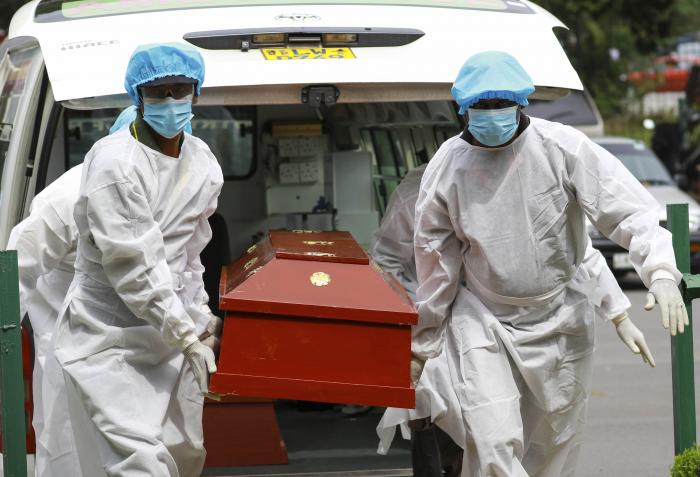
මේ අතර මෙරට කොවිඩ් ආසාදිතයන්ගේ සියයට 1.5ක් මරණයට පත් වන බවත් ආසාදිතයන්ගෙන් සැලකිය යුතු පිරිසකට දැඩිසත්කාර ඒකකයන්හි ප්‍රතිකාර ලැබීමට සිදු වී ඇති බවත් එම නිවේදනයේ වැඩිදුරටත් දැක්වේ.

Covid Patients should not be inconvenienced – President Gotabaya

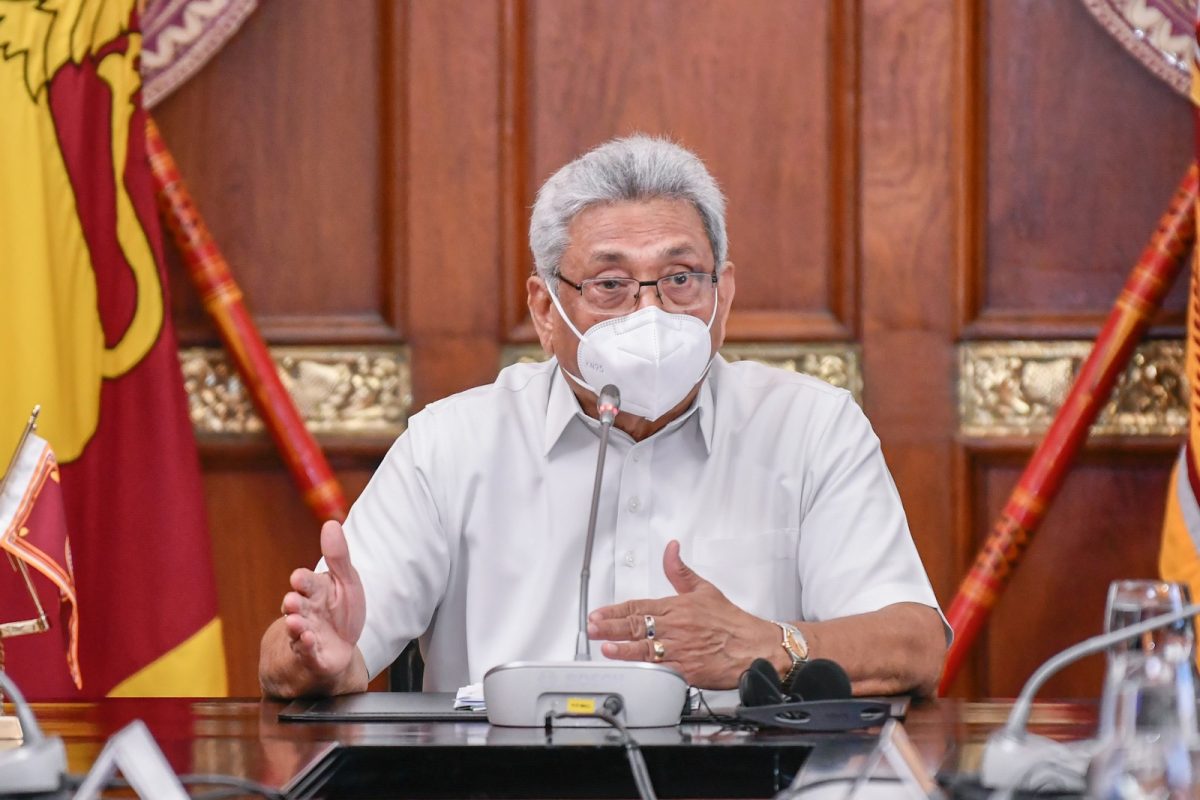
President Gotabaya Rajapaksa has instructed the Heads of Health Services not to allow any patient coming to hospitals with COVID-19 symptoms to be inconvenienced.

There has been an increase in the number of patients being treated at hospitals in several major Cities including Colombo due to COVID-19 symptoms. The President emphasized that they should not be inconvenienced due to the congestion that occurred in diagnosing such patients.

Intermediate treatment centres have been set up in several major cities since a few months ago. The centres were designed with the objective of preventing infected people from being inconvenienced in any emergency situation. Therefore, the President pointed out the need to refer those who show symptoms first to the Intermediate Treatment Centres and then to the hospitals after monitoring the patient’s condition.

The President made these remarks at a meeting held with the Special Committee on Prevention of COVID 19 Outbreak on vaccination drive and its future plans,  at the Presidential Secretariat today (06).

The President instructed Ministers, State Ministers and Health Officials to directly intervene to create a proper method to avoid any inconvenience to the public at the hospital level.

President Rajapaksa further stated that it is the responsibility of health professionals to constantly advise the public through the media to avoid contracting the virus.

It was also decided to provide facilities for anyone over the age of 30 to receive the first dose at any of the vaccination centres that administer the second dose.

Vaccines have been ordered to provide both two doses to all citizens over the age of 18 before September. The government is even prepared for a third dose. However, Consultant Neurosurgeon Dr. Prasanna Gunasena said it was disappointing to note the lack of support from the public to prevent the spread of the virus.


ළමා හා කාන්තා හිංසනයන් වැළැක්වීමට ……

දරුවන්ගේ ආරක්ෂාව ග්‍රාමීය මට්ටමින් ශක්තිමත් කළ යුතු බව ජනාධිපති ගෝඨාභය රාජපක්ෂ මැතිතුමා අවධාරණය කරයි.

ළමා මෙහෙකාර සේවය පිළිබඳ අනාවරණය වී ඇති තොරතුරු වලට අනුව ඉන් ඉහළ ප්‍රතිශතයක් වතු ආශ්‍රිත දරුවන්ය. මේ තත්ත්වය වළක්වා ගැනීමට අවශ්‍ය බලතල ග්‍රාම නිලධාරී වසම් මට්ටමින් ක්‍රියාත්මක විය යුතු බව ජනාධිපතිතුමා පෙන්වා දෙයි. වතු ආශ්‍රිත පවුල්වල තොරතුරු ග්‍රාම නිලධාරීන් සතුය. යම් නිවසක දරුවෙකු නොමැති බවට ලැබෙන තොරතුරු මත ඒ පිළිබඳව කඩිනමින් ක්‍රියාත්මක වී ළමා මෙහෙකාර සේවය නැවැත්වීමට පියවර ගත යුතු බව ජනාධිපතිතුමා පැවසීය.

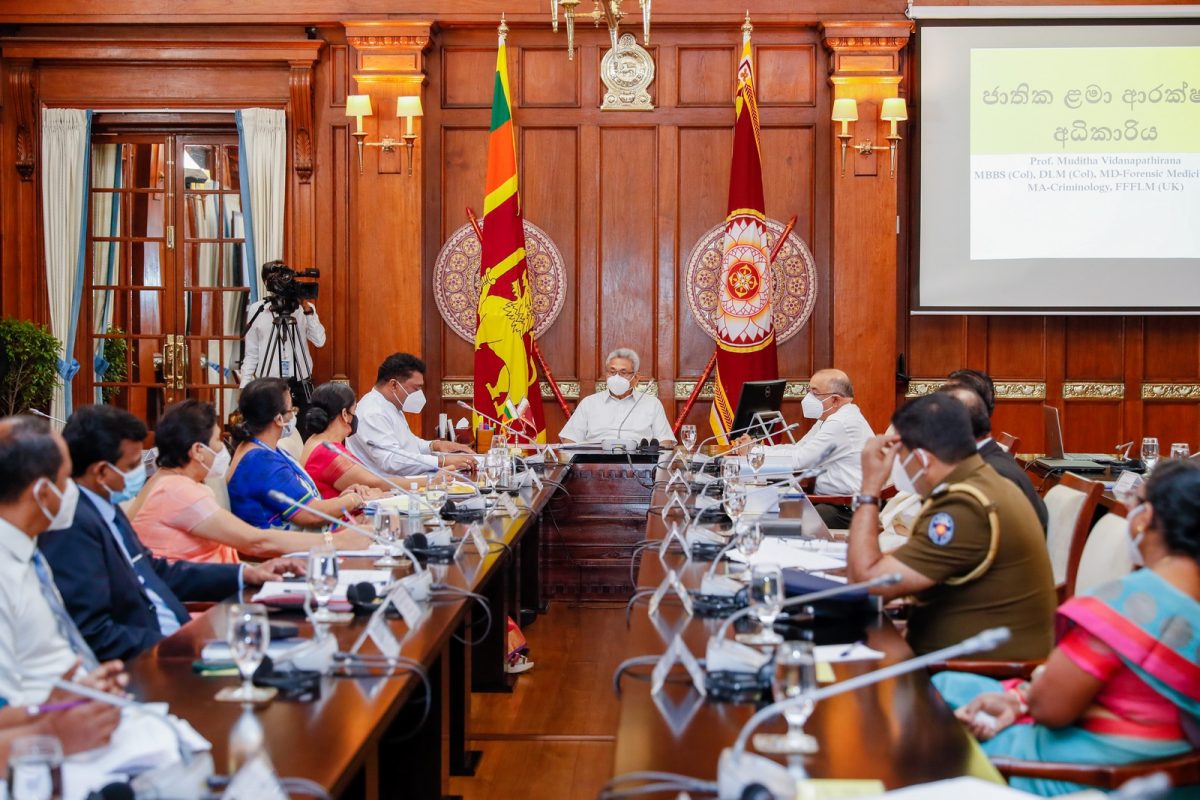
ජාතික ළමා ආරක්ෂක අධිකාරිය හා රේඛීය ආයතන සමග අද (05) පෙරවරුවේ ජනාධිපති කාර්යාලයේ දී පැවති සාකච්ඡාවේ දී ජනාධිපතිතුමා මේ බව සඳහන් කළේය.

ළමා හා කාන්තා සංවර්ධනය සඳහා “සෞභාග්‍යයේ දැක්ම” ප්‍රතිපත්ති ප්‍රකාශයෙන් විශේෂ අවධානය යොමු කර තිබේ. එය යථාර්තයක් බවට පත් කරගැනීමට වෙනම රාජ්‍ය අමාත්‍යාංශයක් ද ස්ථාපිත කෙරිණ.

ළමා හා කාන්තා හිංසනයන් වැළැක්වීමට රාජ්‍ය අමාත්‍යාංශය ගෙනයන වැඩපිළිවෙළ ඇගයීමට ලක්කළ ජනාධිපතිතුමා වෙනත් රටවල ළමා සංවර්ධනය සඳහා කර ඇති පර්යේෂණය අධ්‍යයනය කර, නාගරිකව හා ග්‍රාමීයව එම ක්‍රමවේදයන් ක්‍රියාත්මක කිරීමට ඇති හැකියාව පෙන්වා දුන්නේය.

අනිවාර්යය කර ඇති පෙර පාසල්, පාසල් හා දහම් පාසල් අධ්‍යාපනයට සියලු දරුවන් යොමු කරවීමත්, ළමුන් පාසල් නොයැවීමට හේතු සොයා ඊට පිළියම් යෙදීමත් ළමා ආරක්ෂක අධිකාරිය සතු ප්‍රධාන වගකීමක් බව ජනාධිපතිතුමා සඳහන් කළේය. සියලු ආගම්වලට අයත් ළමුන් දහම් පාසල් වෙත යොමු කිරීමෙන් ලැබෙන අධ්‍යාත්මික ගුණ වගාව තුළින් දරුවන් හා දෙමාපියන් අතර සම්බන්ධය ශක්තිමත් කළ හැකි බව ජනාධිපතිතුමා විසින් පෙන්වා දෙනු ලැබිණ.

මත්ද්‍රව්‍යයන්ට ඇබ්බැහි වී ඇති දරුවන් ඉන් මුදා ගත යුතු අතර ඊට සමගාමීව ඔවුන් ඒ සඳහා පෙළඹීමට බලපෑ සාධක අධ්‍යයනය කර පිළියම් දීමේ අවශ්‍යතාව රාජපක්ෂ මැතිතුමා අවධාරණය කළේය.

සේවා ස්ථාන වශයෙන් ගෙන කාන්තා හිංසනය පිළිබඳව දැනුවත් කිරීම, මව්වරුන් විදේශගත පවුල්වල දරුවන් පිළිබඳ විශේෂ සැලකිල්ලට ලක්කිරීම, හිංසනයට ලක්විය හැකි බවට සැක සහිත පවුල්වල දරුවන් පිළිබඳ පෙර හඳුනාගැනීමේ අවශ්‍යතාව ජනාධිපතිතුමා පෙන්වා දුන්නේය.

“සෞභාග්‍යයේ දැක්ම” ප්‍රකාරව ජාතික ළමා ආරක්ෂක ප්‍රතිපත්තිය එළිදැක්වීමට අවශ්‍ය සියලු කටයුතු නිම වෙමින් පවතින බව කාන්තා හා ළමා සංවර්ධන, පෙර පාසල් හා ප්‍රාථමික අධ්‍යාපන, පාසල් යටිතල පහසුකම් හා අධ්‍යාපන රාජ්‍ය අමාත්‍ය පියල් නිශාන්ත මහතා පැවසීය.

පාර්ලිමේන්තු මන්ත්‍රී රිෂාඩ් බදියුදීන් මහතාගේ නිවසේ දී පිළිස්සීමට ලක් වී මිය ගිය දැරිය වෙනුවෙන් නිවසක් ඉදිකර දීමට හා පවුලේ ආර්ථික තත්ත්වය නඟා සිටුවීමටත්, සහෝදරියන් දෙදෙනෙකුට ස්වයං රැකියා අවස්ථා උදාකර දීමට අවශ්‍ය පියවර ගෙන ඇති බව පියල් නිශාන්ත මහතා සඳහන් කළේය.

ළමා හා ස්ත්‍රී අපයෝජන වැළැක්වීමට ගෙන ඇති ක්‍රියාමාර්ග, ඒ හා සම්බන්ධ අධිකරණ කටයුතු කඩිනම් කිරීමට ගෙන ඇති පියවර පිළිබඳව  ද අමාත්‍යවරයා විසින් පෙන්වා දෙනු ලැබිණ.

ළමා ආරක්ෂක අධිකාරිය හා රේඛීය ආයතනවල කාර්ය සාධනය පිළිබඳව ජනාධිපතිතුමා දැනුවත් කරනු ලැබීය.

ජනාධිපති ලේකම් පී.බී. ජයසුන්දර, රාජ්‍ය අමාත්‍යාංශයේ ලේකම් කේ.එම්.එස්.ඩී. ජයසේකර, ජාතික ළමා ආරක්ෂක අධිකාරියේ සභාපති මහාචාර්ය මුදිත විදානපතිරණ යන මහත්ම මහත්මීහු සහ අදාළ ආයතනවල අධ්‍යක්ෂ මණ්ඩල සාමාජිකයෝ ඇතුළු නිලධාරීහු පිරිසක් මේ අවස්ථාවට එක්ව සිටියහ.

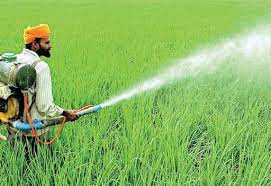
Chemical Fertilizers ban Changed?

Lalith Weeratunga, Principal Advisor to the President, highlighted that although some decisions were made based on scientific facts, the government’s policy on the use of organic fertilizers remains unchanged.

Mr. Weeratunga made these remarks at a media briefing held at the Presidential Media Centre (PMC) on the topic “Has the ban on chemical fertilizers been lifted?” this morning (05). This was the second weekly media briefing organised by the PMC.

Responding to questions raised by the journalists, Mr. Weeratunga said that transforming a country that had been accustomed to using chemical fertilizers for decades to use organic fertilizers is a challenging endeavour and therefore, the different opinions directed at the move were reasonable.

The Secretary to the Ministry of Agriculture, Senior Professor Udith K. Jayasinghe, stated that only natural minerals and chelated matter produced using plant nutrients will be imported and those are essential for the biological enrichment of the soil. The Secretary pointed out that as the use of organic fertilizer is a brand new experience for many farmers, a mechanism has been implemented to monitor these activities on a weekly basis and plans are all set to apply new technologies and techniques for this purpose. He further added that the experts from state universities, faculties of agriculture and the field would be consulted in this regard and noted that they would be obliged to have the support of media outlets as well.

Despite import restrictions, certain decisions have to be taken in terms of national interest, but these decisions will not be taken outside of policy, Finance Ministry Secretary S.R. Attygalle stressed.

Commenting on the decision taken to import only natural chelated minerals and micro matter nutrients, the Finance Ministry Secretary said that such measures are being implemented under the strict supervision and recommendation of the Ministry of Agriculture and other relevant institutions. Plans have been made to provide the required amount of organic fertilizer in each area based on a code given to the farmers following a soil test. Dr. Ajantha de Silva, Director General of Department of Agriculture, stated that the soil tests will commence next week.

Responding to the question raised by journalists as to how the government will respond if the harvest reduces due to the use of organic fertilizer, President’s Spokesman Kingsly Rathnayake quoted a statement made by the President and said, “Issues and complications may occur at the launch of the programme. However, the implementation of a sustainable green socio-economic pattern should not be delayed. We need to identify the perfect solutions to the problems that emerge. The farmers may assume that giving up on chemical fertilizers will reduce the yield. If it does, the President guaranteed that the amount of over Rs. 50 billion that is spent annually on chemical fertilizers will be used to compensate them”.